Florida Keys Reef System · 18 ft depth
Ocean Memorial Reefs
Where the ocean
becomes
their garden.
Cremated remains, shaped into living reef structures, placed on the ocean floor. A memorial that grows more beautiful with every passing year.
Scroll to begin
The Process
From ash to living
coral ecosystem.
The transformation takes four careful steps. Each one handled with the same quiet attention you'd want for someone you love.
The Remains
Cremated remains are gently combined with a marine-safe, pH-neutral concrete mixture — a process developed with marine biologists to be entirely non-toxic to ocean life.
No harmful chemicals. No lasting disturbance.
The Casting
The mixture is hand-poured into reef structures — spheres, domes, and branching forms — each cast with a small memorial plaque bearing a name and the coordinates of the reef site.
Unique to your family. Permanent as stone.
The Placement
Our dive team places the structure at a permitted reef site, chosen with your family. The GPS coordinates are yours forever — you can return to the exact spot by boat.
A location you can visit. An address in the sea.
The Living
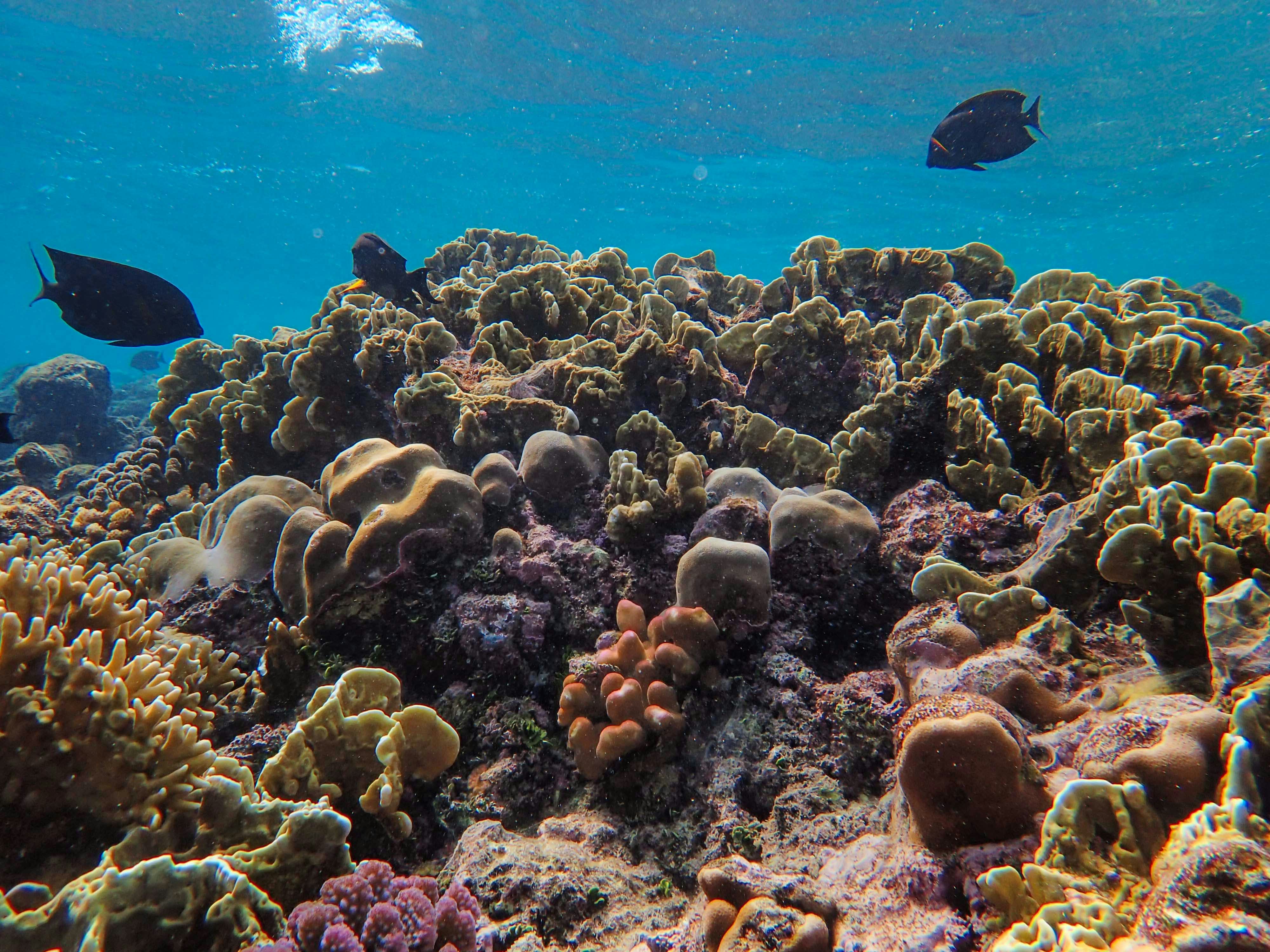
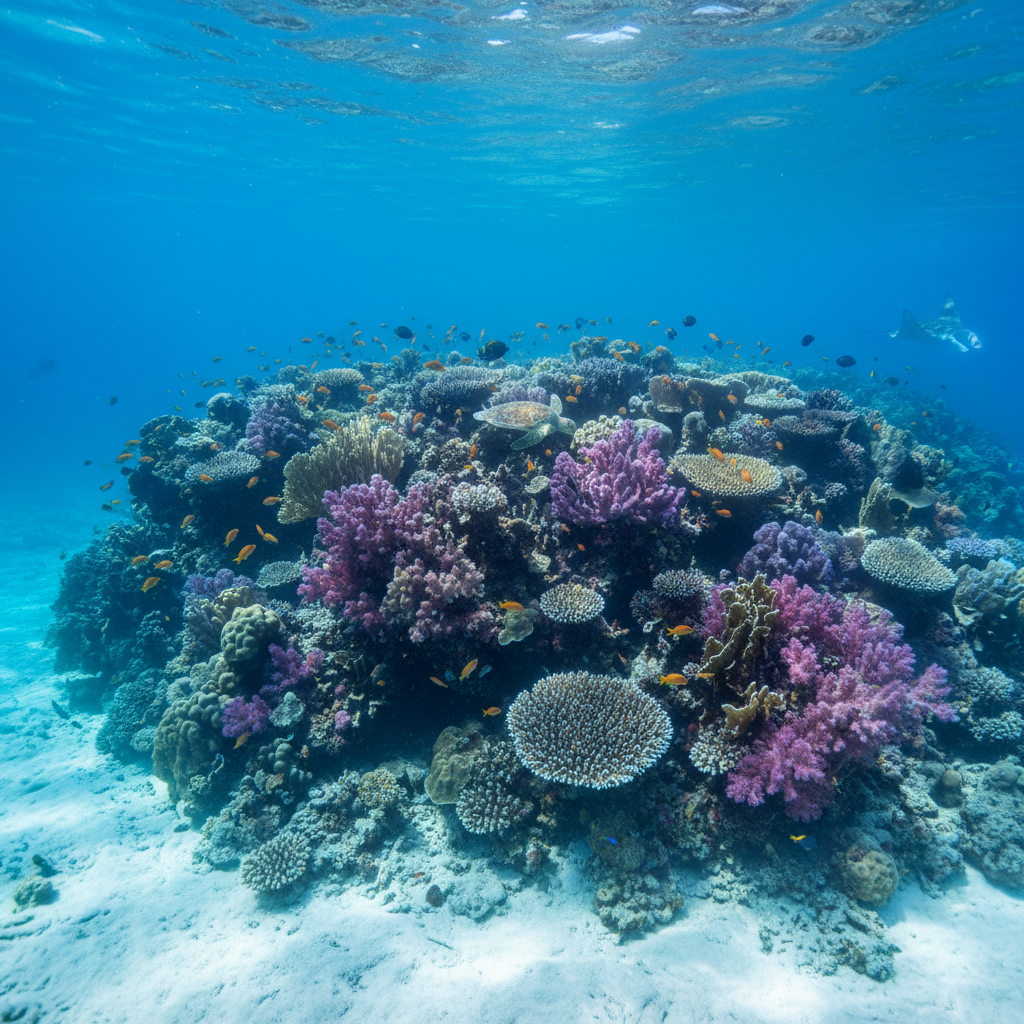
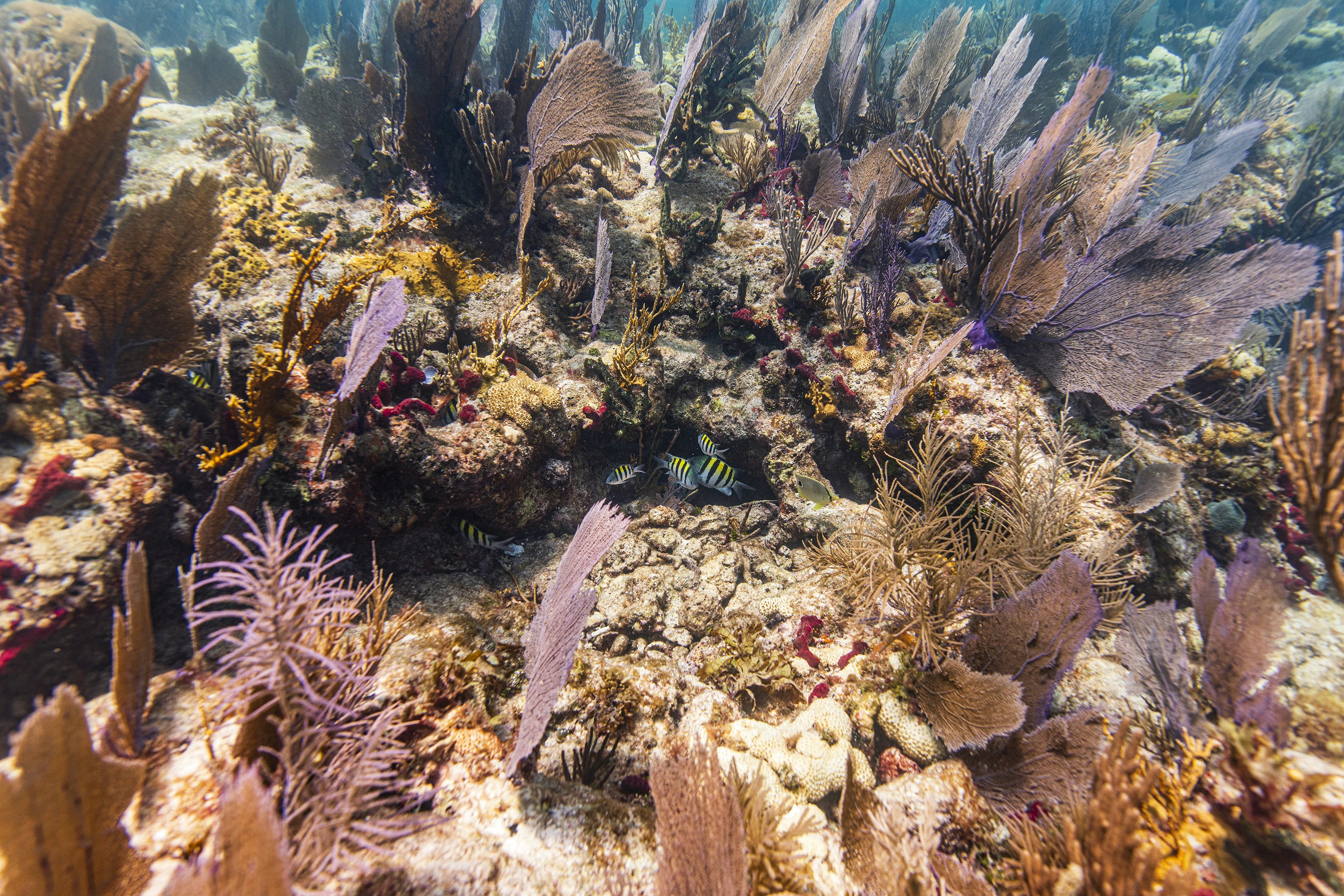
Within weeks, coral polyps begin to settle. Within months, small fish shelter in the crevices. Within years, the reef structure becomes indistinguishable from the natural ocean floor.
Life, returning to life.
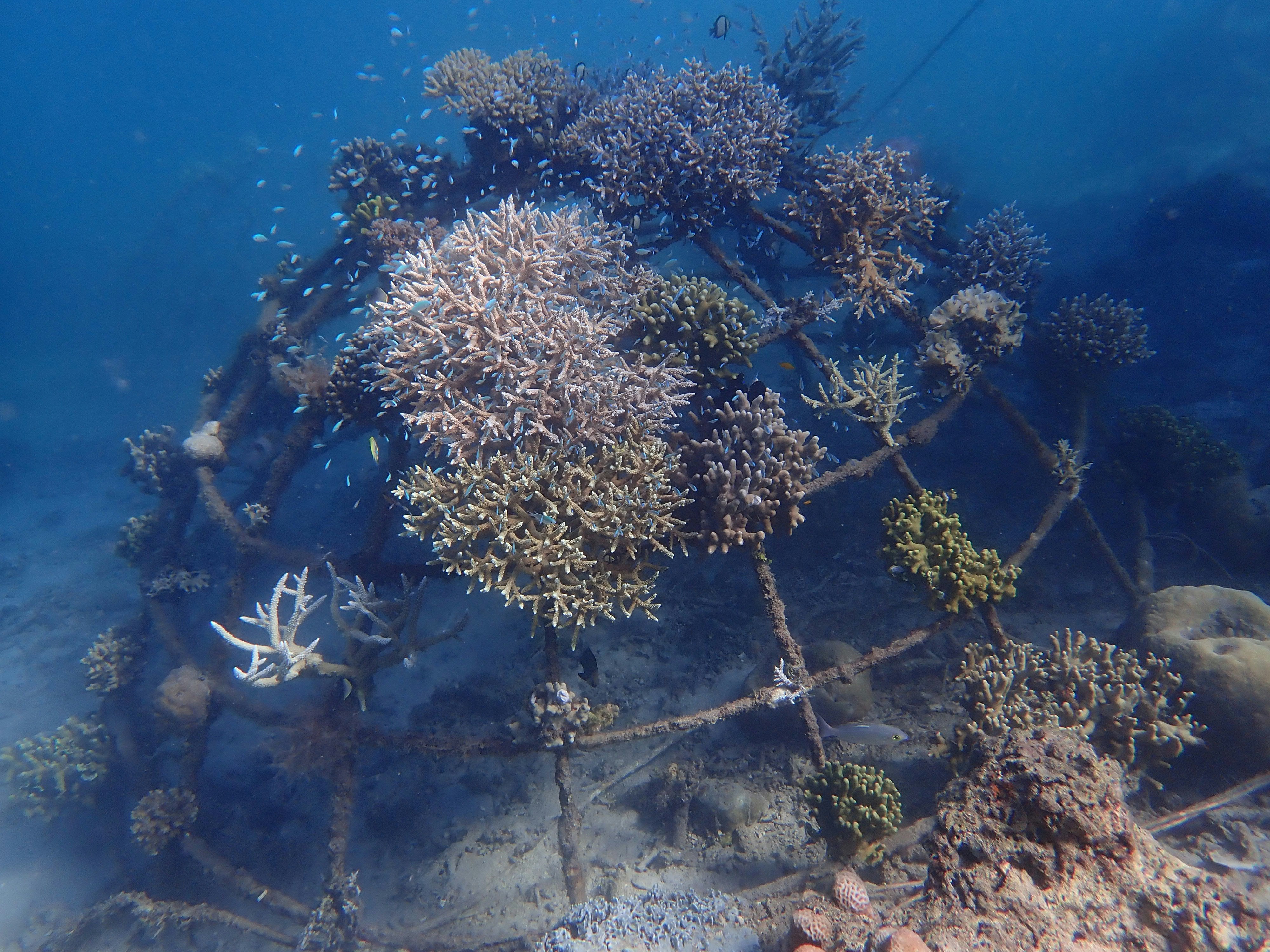
12 months after placement · Florida Keys
GPS Coordinates
Every family receives the precise coordinates of their reef — latitude, longitude, depth. You can return by boat to float above the exact spot, any time, for the rest of your life.
Family Stories
What families have
found in the water.
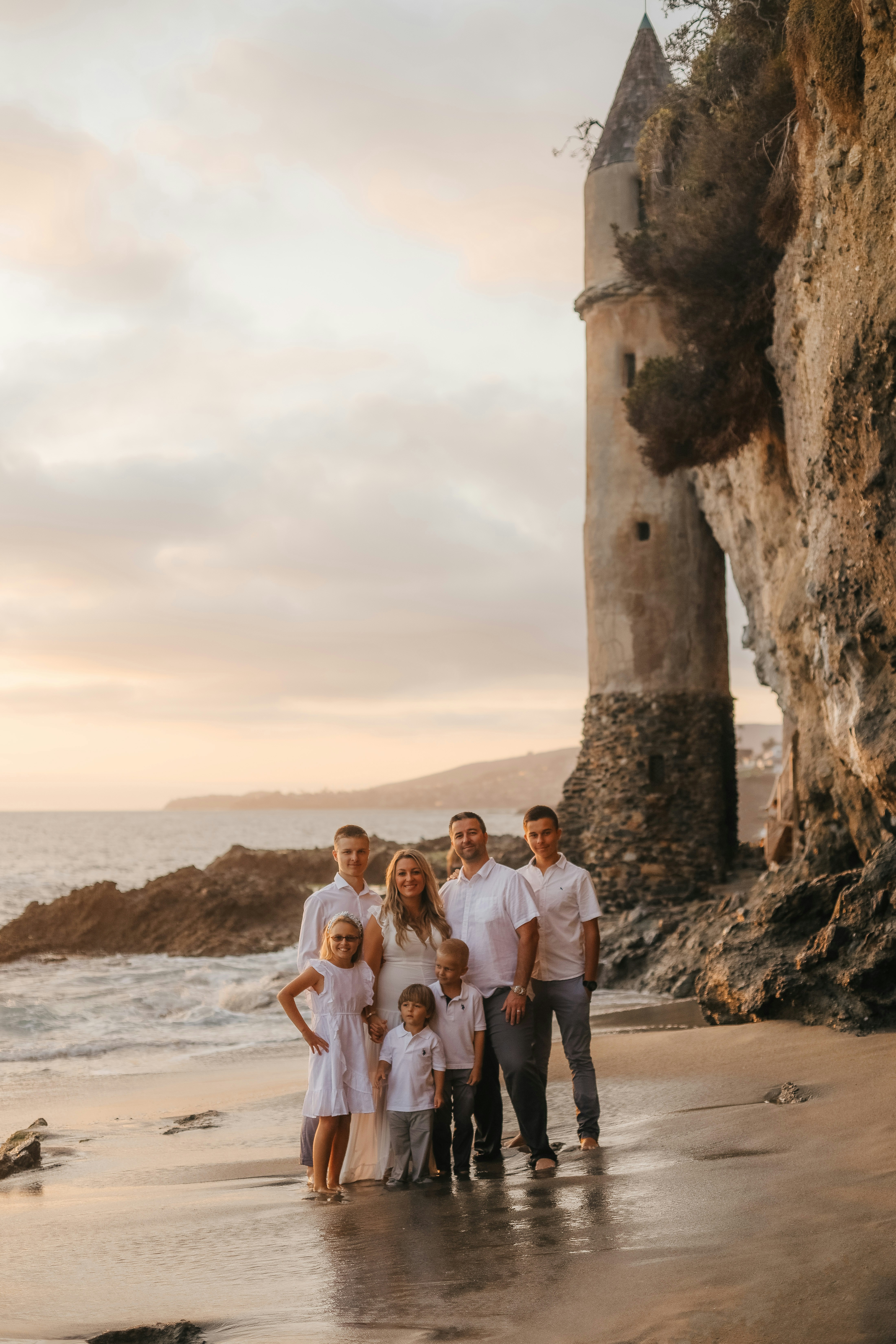
“He spent forty summers on that water. Every vacation, every retirement trip, every time the world got too heavy — he'd find a way back to the ocean. When he died, a marble headstone in a quiet suburb felt like a sentence. Reef gave us a different answer. We took the boat out last October, cut the engine over the coordinates, and just floated there. The water was so clear we could see the structure below us, already covered in something living. That was him, still doing what he always did — making a place for things to grow.”
Margaret & Tom Okafor
Islamorada, Florida
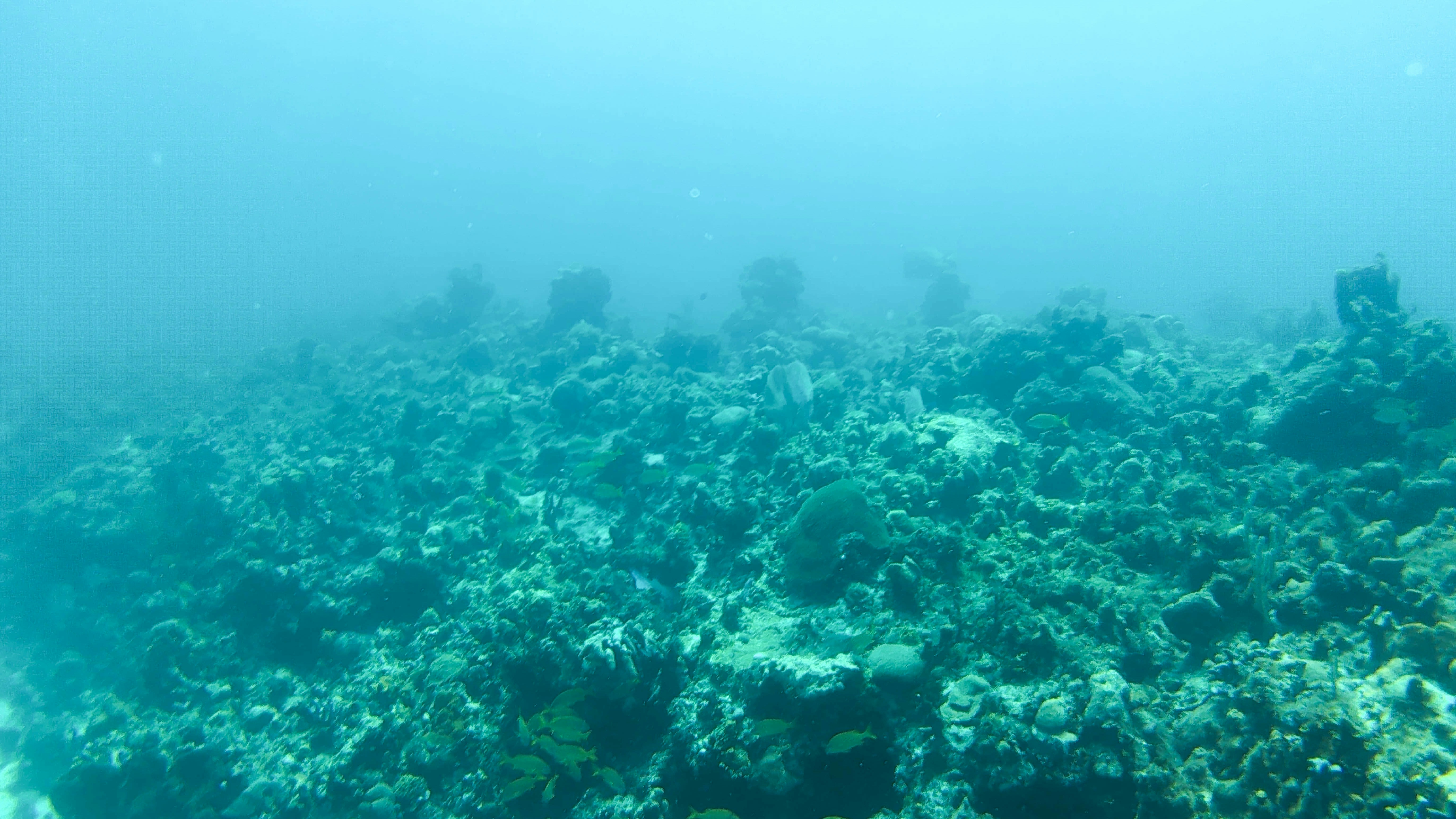
22 ft · placed March 2023
18 ft · placed July 2023
“My mother was a marine biology teacher for thirty-one years. She used to bring tide pool specimens to class in little jars and let the students hold them. She wasn't religious, but she believed in the continuity of living things — that nothing really ends, it just changes form. We chose Reef because it felt like something she would have chosen herself. The biologist who handled her placement sent us a photo six months later. There were already two species of wrasse living in the structure. She would have known their Latin names.”
Diane Castellanos
San Diego, California
“Dad was a Navy veteran. He loved the sea in the way that people who've crossed it in a ship love it — not as a vacation, but as something that tested him and let him pass. A cemetery with flags and stone rows didn't fit the man we knew. He wanted something open, something that kept moving. The day we placed his reef, there was a current running through the water and the structure drifted slightly before it settled. That felt right. He always moved toward something.”
The Nguyen Family
Hawaii, Oahu
26 ft · placed November 2023
Reef Growth
Dr. Paloma Reyes
Marine Biologist · Reef Ecologist
"The alkaline surface of our reef structures actually accelerates coral larval settlement. We're seeing colonization rates 40% faster than on natural substrate. The structures don't just accommodate life — they invite it."
Each placement is overseen by a certified marine biologist and filed with NOAA under permitted reef enhancement zones. The sites are monitored annually, and families receive a photographic update of their reef each year on the anniversary of placement.
NOAA-permitted placement sites
Annual photographic reef report
Species diversity tracked over time
Zero-impact removal of dive equipment
Not ready to speak yet?
Download our Family Guide — a quiet, unhurried look at the process, written for families at every stage of deciding.
Begin Here
A conversation,
not a transaction.
No pricing discussion on this call. No pressure. Just us, listening, and answering whatever questions you're carrying.
Calls are 20–30 minutes, unhurried
Available mornings, afternoons, evenings
No obligation, no package discussion